TrialValue® reference-standard definitions
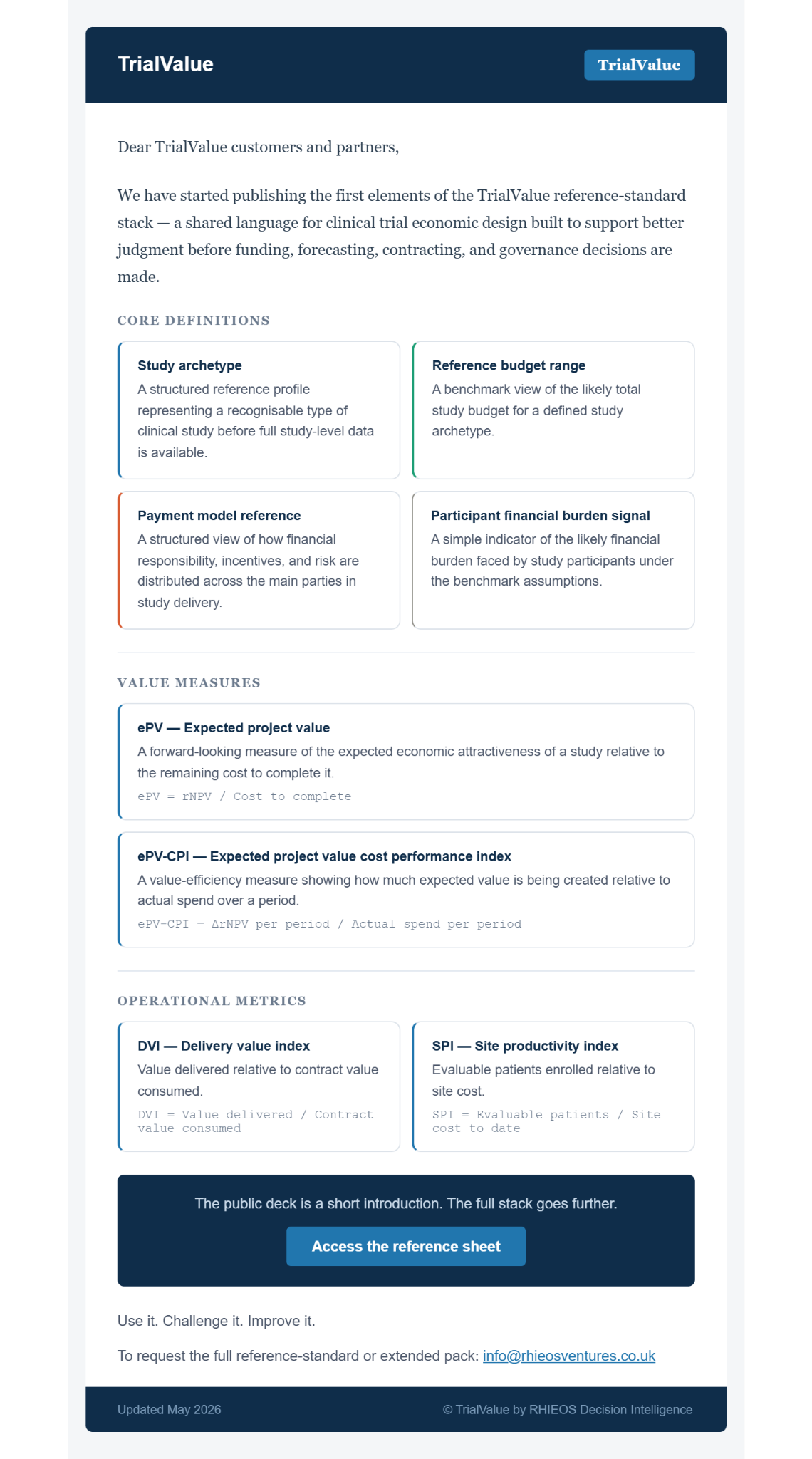
Study archetype, reference budget range, payment-model reference, participant financial burden signal and selected value/operational measures.
Public RHIEOS material without a form or sign-in. Each item shows its status, version and use terms.
Public reference material on clinical-development economics, contracting and scientific knowledge.

Study archetype, reference budget range, payment-model reference, participant financial burden signal and selected value/operational measures.
Introduces the Knowledge ePV™ proposition and its use without disclosing valuation logic or the detailed working method.
How CTAide™ and trust-centred design can help rethink clinical-trial contracting, from pre-mortem and root causes to practical tools.
A CTAide-ready reference for a fair, complete and trust-focused clinical trial agreement, including design rules, core elements and negotiation hotspots.
Public material on human oversight, evidence, capability, change and recovery in AI-supported regulated work.

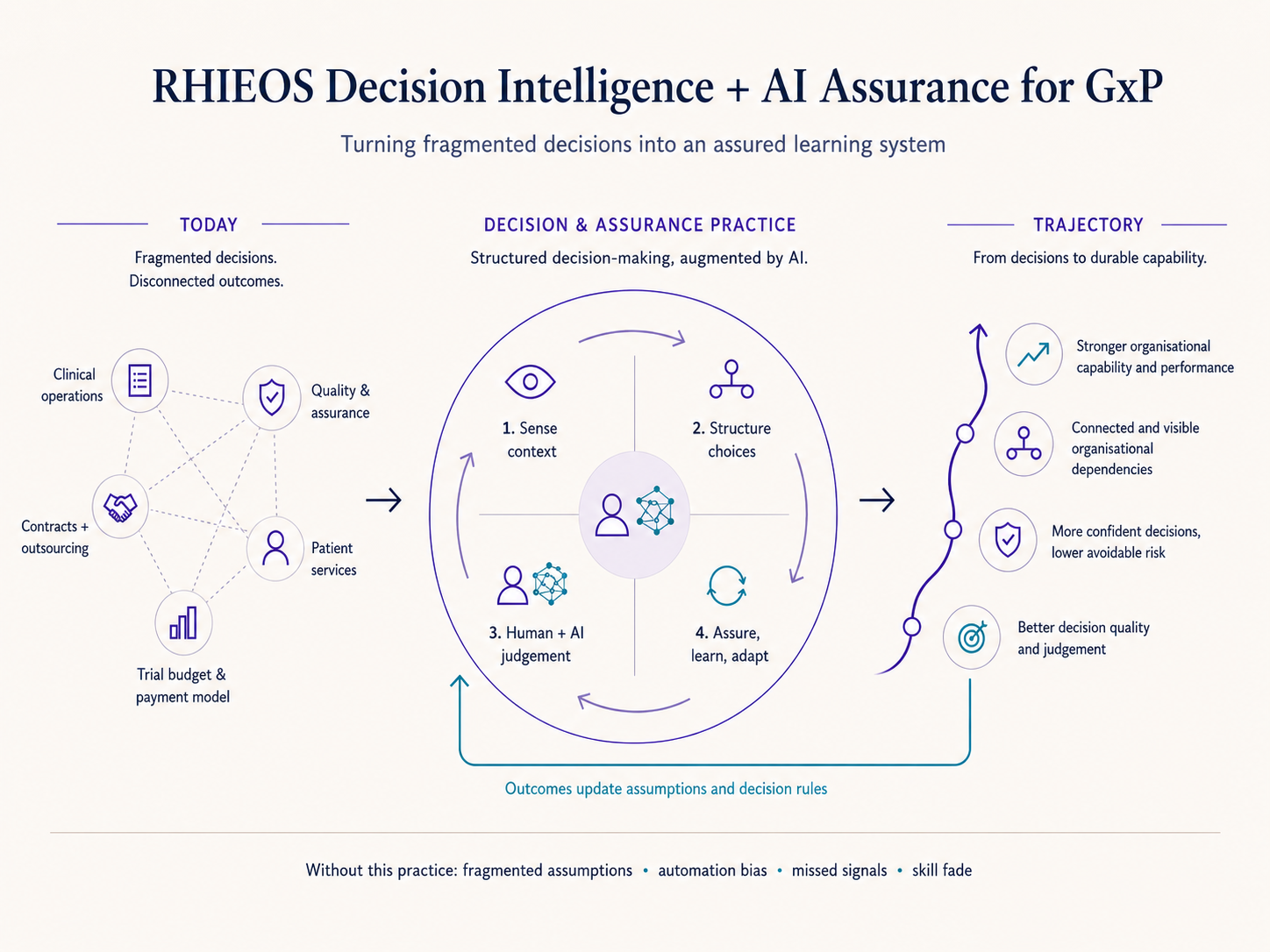
A visual statement of the connection between context, structured choices, human + AI judgement, assurance and learning.
Why assurance should preserve clear intended use, accountable human control, evidence, professional capability and ongoing recovery.
A public introduction to the Enterprise Decision Compass™ and its use in leadership and organisational learning.
A leadership view of purpose, important choices, outcomes, capability and learning without publishing the detailed architecture.

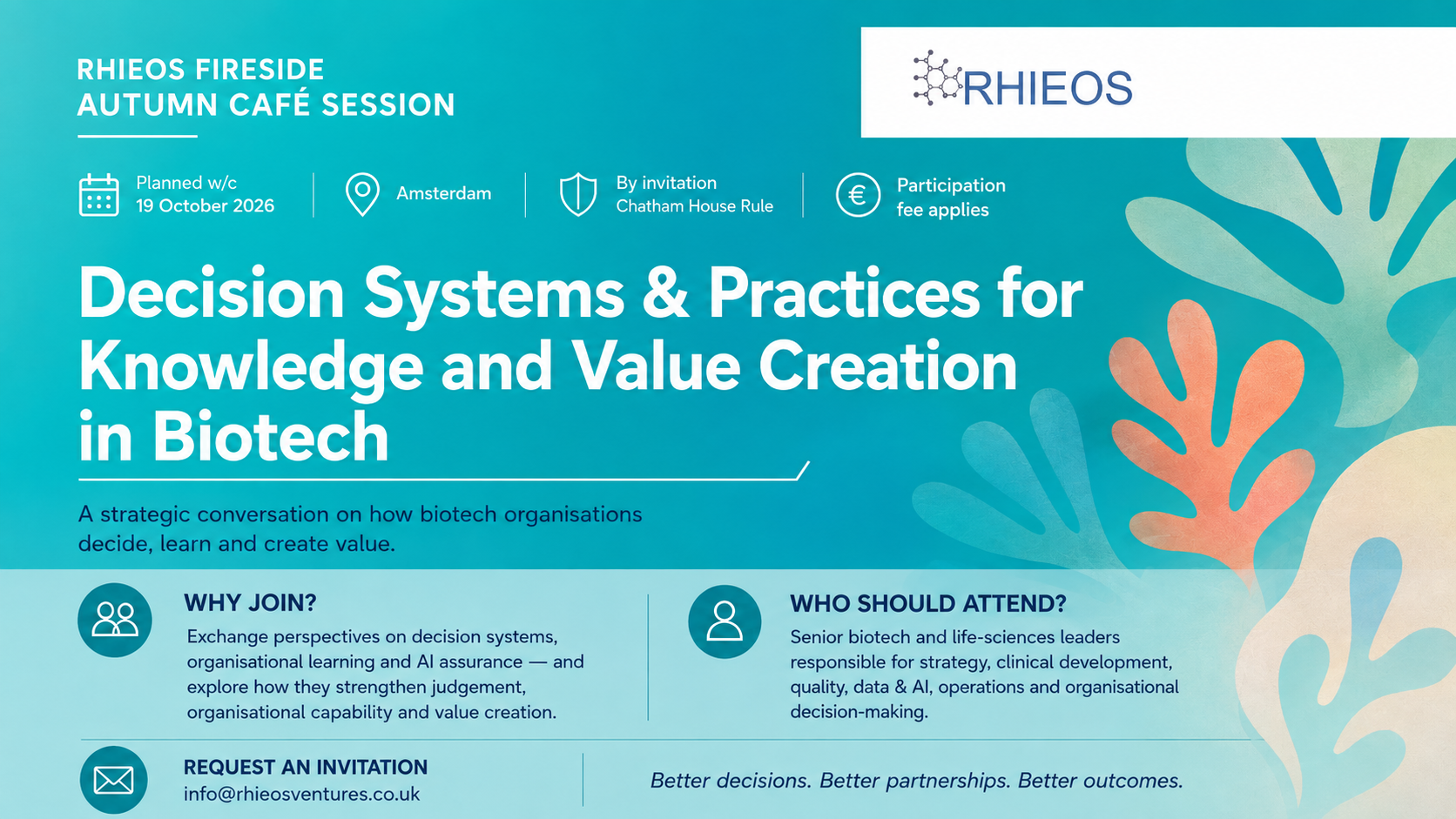
A planned RHIEOS Fireside session connecting strategy, organisational learning and AI assurance.
Two connected threads: trial financial burden, made visible during design (see the TrialValue® reference sheet under Asset Value), and HEMA-Global™, the main adjacent RHIEOS initiative on sickle cell disease and blood health in Africa — its dedicated site remains the primary source.
Care, evidence, access, financing and partnership around sickle cell disease and blood health in Africa.
Short working notes, questions, corrections and responses linked to the resources themselves.
Knowledge ePV™ asks whether useful scientific learning can be made visible alongside conventional asset economics.
A practical question for organisations relying on AI-supported regulated work.